
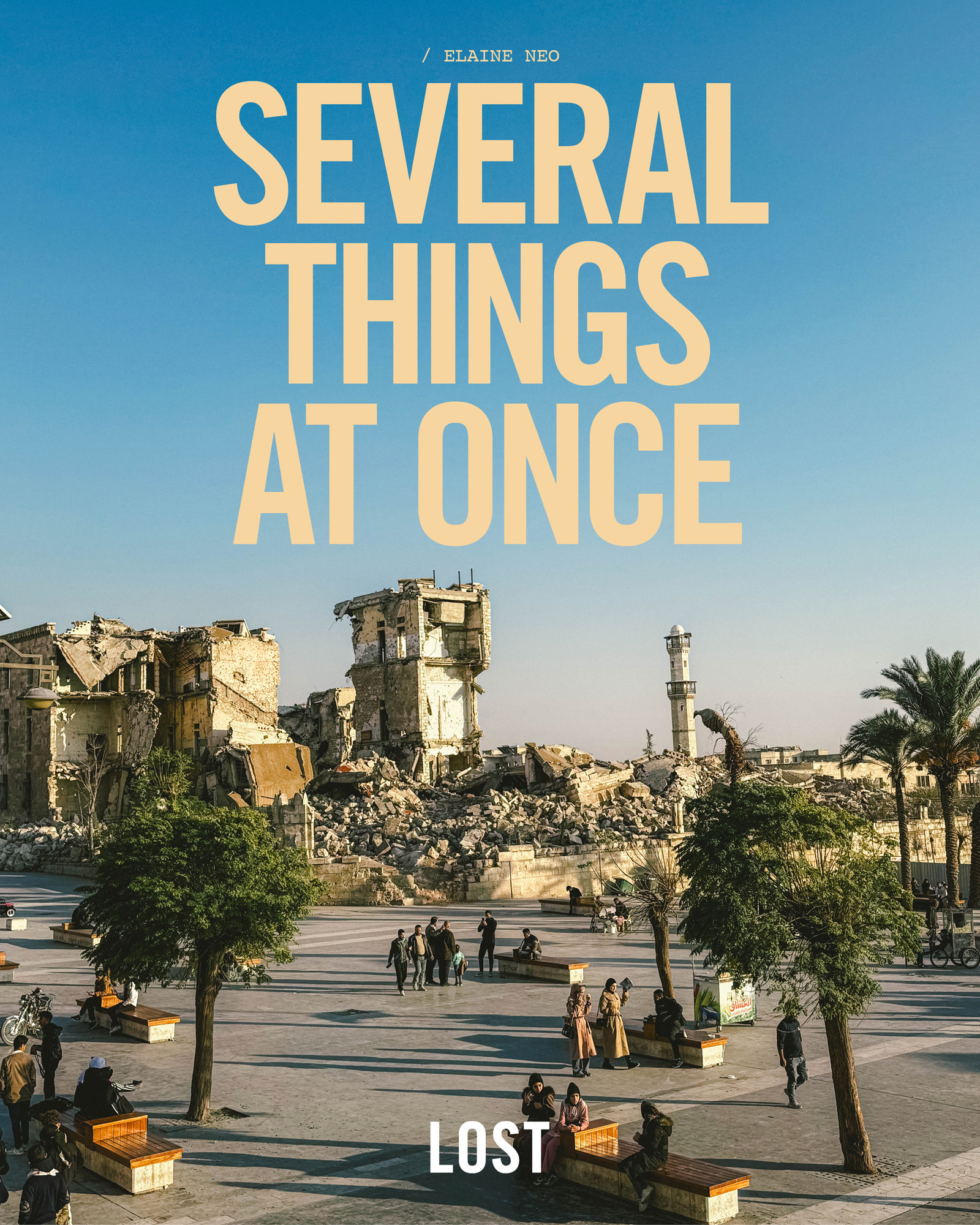
SEVERAL THINGS AT ONCE
BY ELAINE NEO
We tend to form an opinion of a country from its headlines, and what nagged at me about Syria’s was the assumption buried inside them: that there could be nothing left there now but the war. When I told people I was going, they all asked the same thing in the same key of polite alarm: omg, why? I didn’t have an answer that would have satisfied them, or, frankly, me. I went on a pull I couldn’t explain. A little curious, a little unsure, and the not-knowing turned out to be the most useful thing I packed. Syria, as it happened, was busy being several things at once.
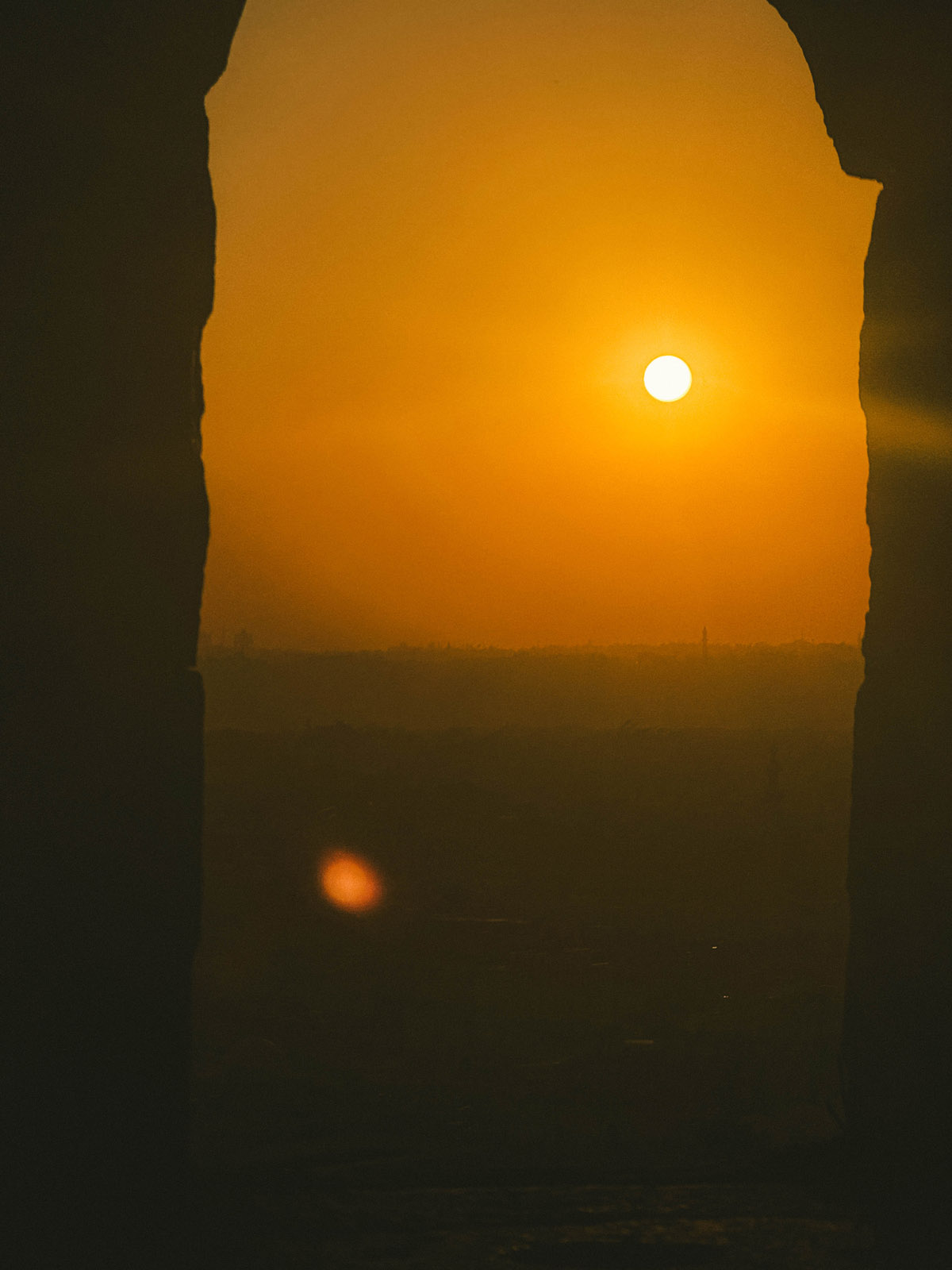
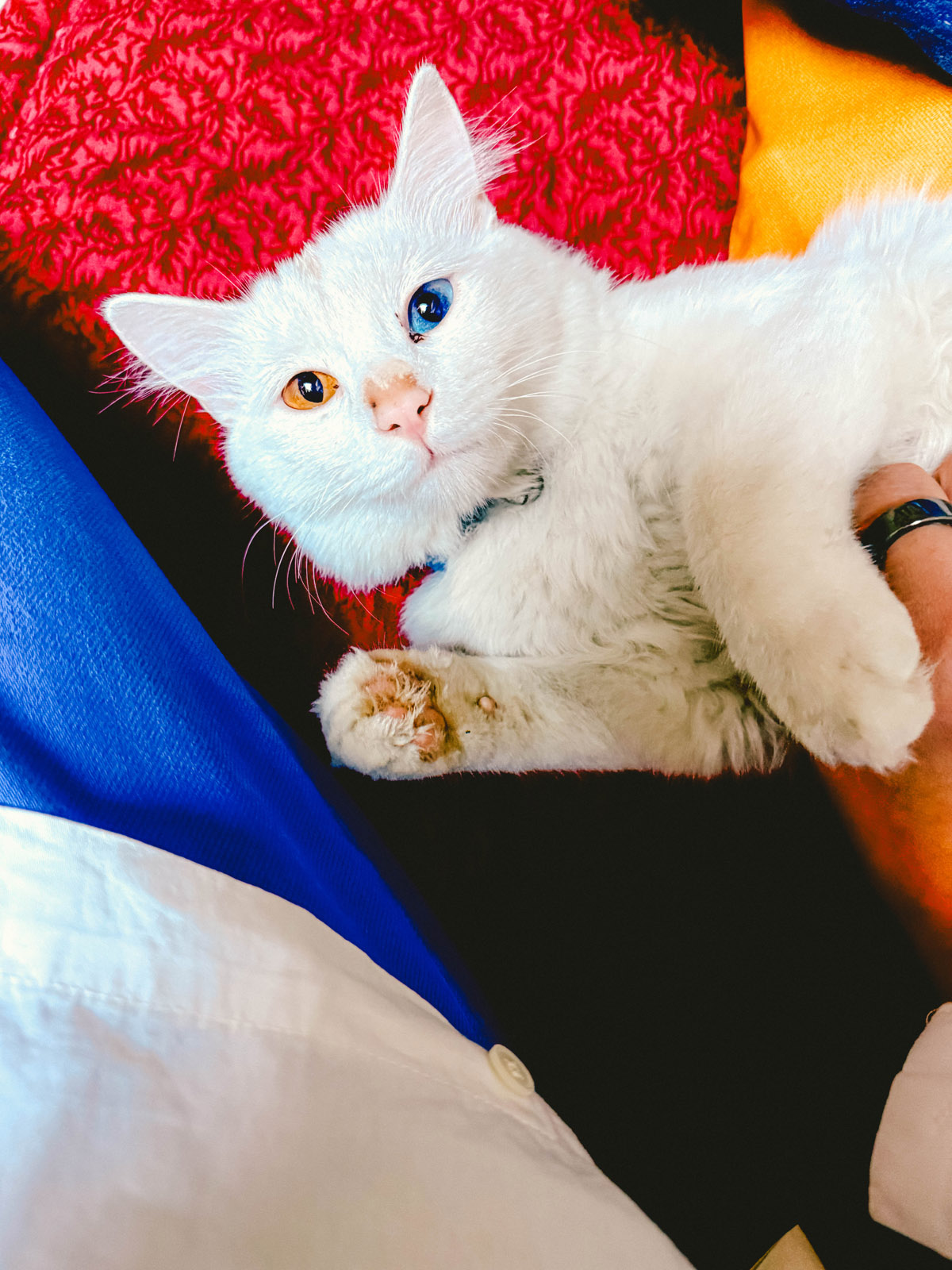
I should establish early that I am not a brave person. I seek out the nearest available comfort at all times, like my cat, who loves anything warm. As the twelve of us sat out a delayed flight from Doha to Damascus, I asked, mouth full of sushi, “Is this a sign?”
Hours later we reached the tourist line at Damascus airport. A very short queue, where an orange cat had strayed in, and we were all crouched petting it when a woman walked over, looked me in the eyes, held my arms, and said, Welcome to Syria. Thank you for visiting us. She smiled in a way that was clearly load-bearing and left. I stood there running the little background program I run at home, the one scanning for the catch, and the program returned nothing. She had crossed a room to make a stranger feel welcome and then gone about her day, which, where I’m from, is unheard of.
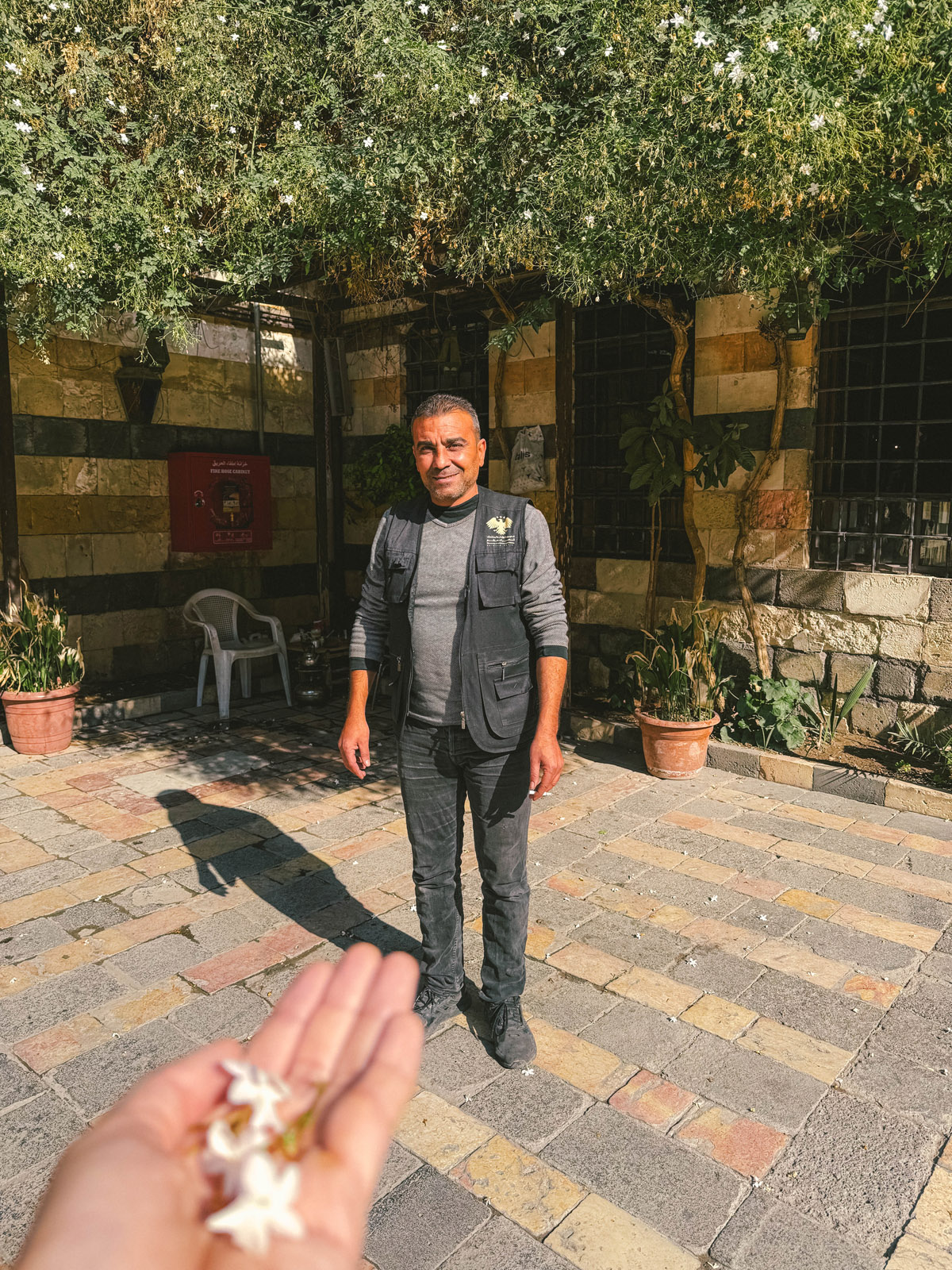
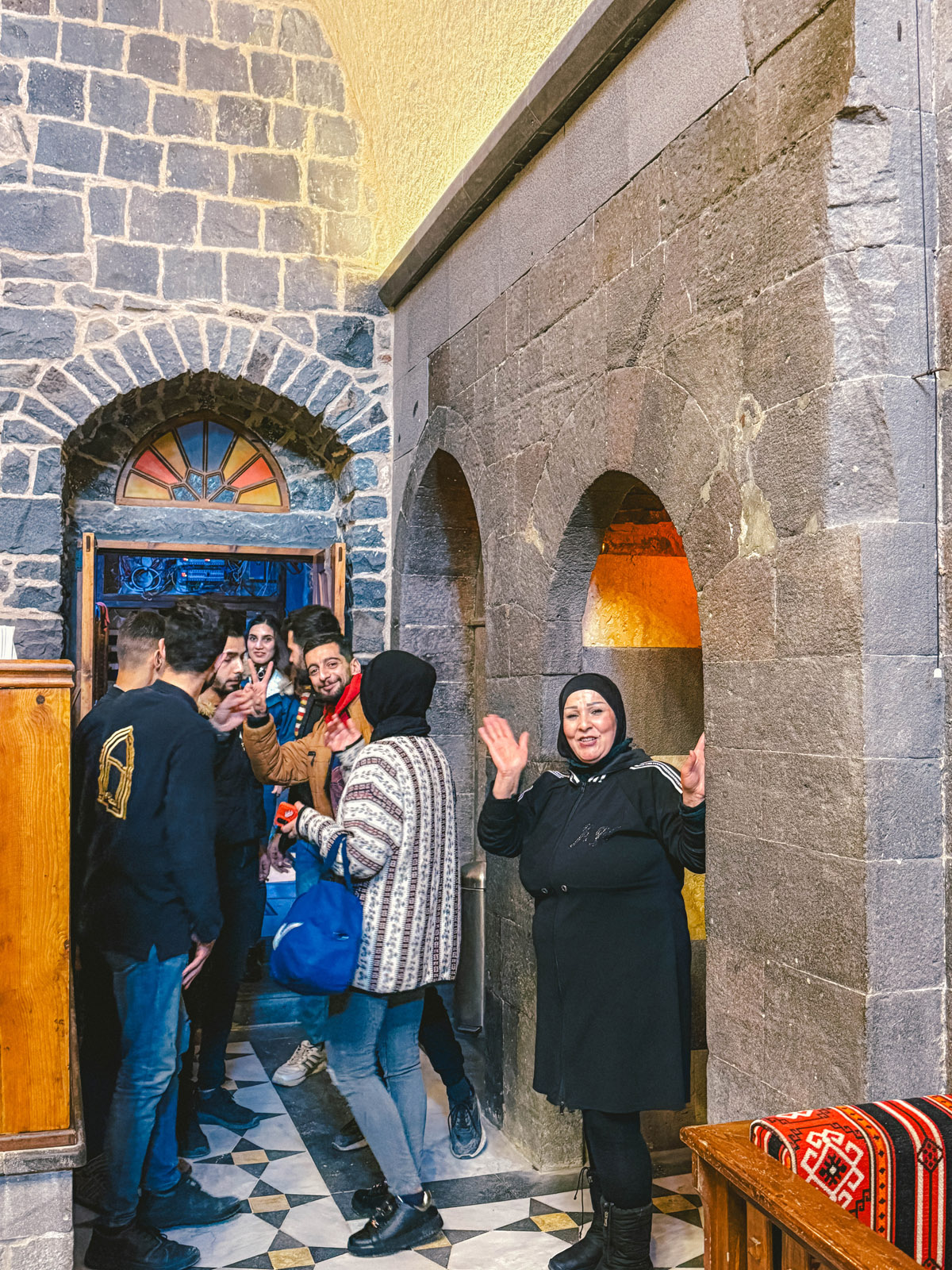
It kept happening for the next eleven days. The Hello! Welcome! Where are you from? that came at our group of twelve from doorways and passing cars, from kids and grandfathers, all day. In Aleppo, walking to dinner, I exclaimed out of sheer excitement “that fish looks good” at a family eating outside, and the family waved all twelve of us over to share what they had. Not because they had extra, but because we were there, and you feed the people who are there. A restaurant owner I asked for a bathroom sat the whole group down with tea none of us had ordered, because letting guests leave un-hosted was, apparently, unthinkable. Vendors who pushed food into our hands and physically refused the money. A museum guard cupped a flower into my palm just so I could smell it. Nobody treated us as though we didn’t belong. People caught our eyes and grinned and waved us in, to their tables, their shops, their homes, their cameras.
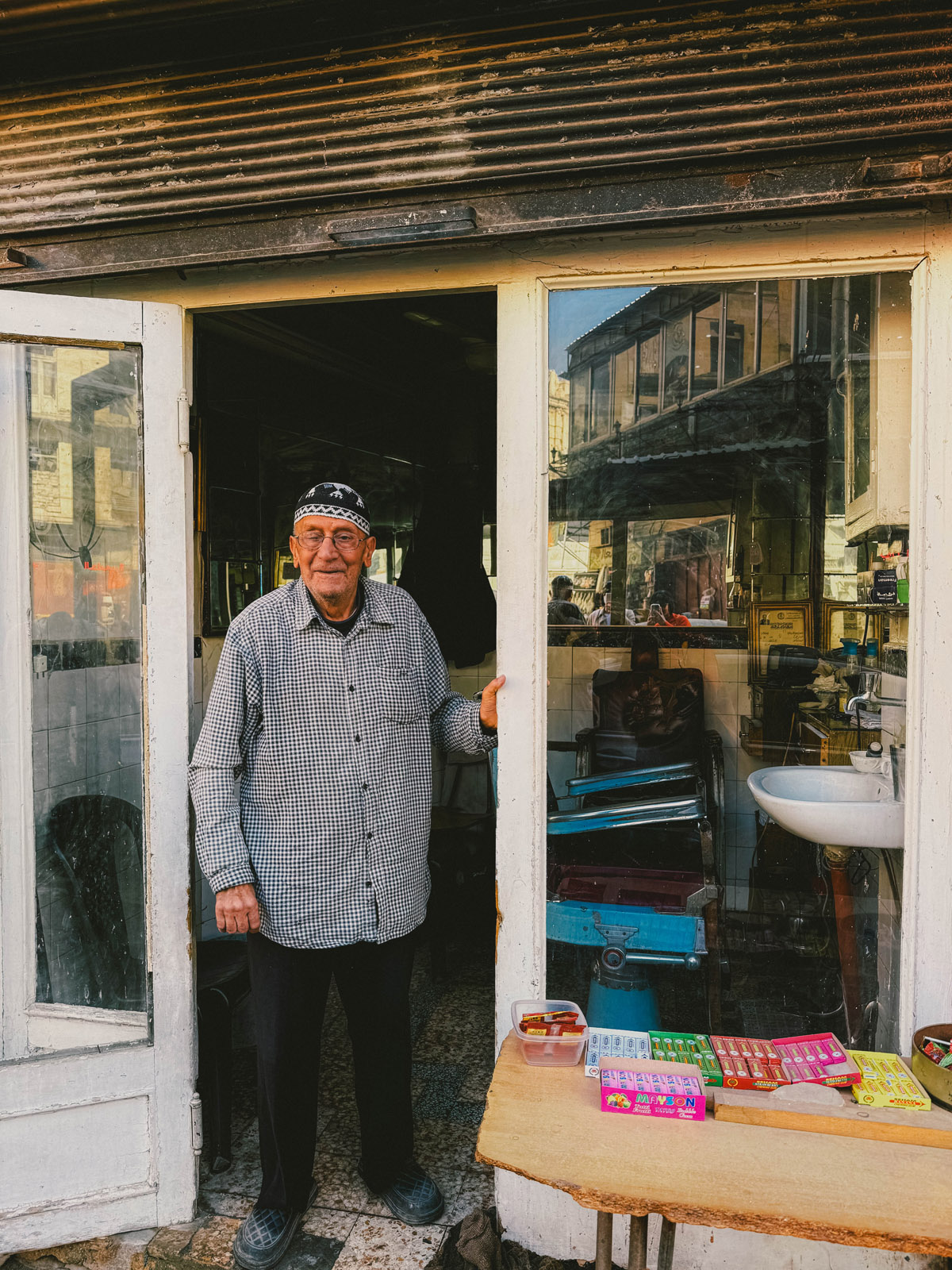
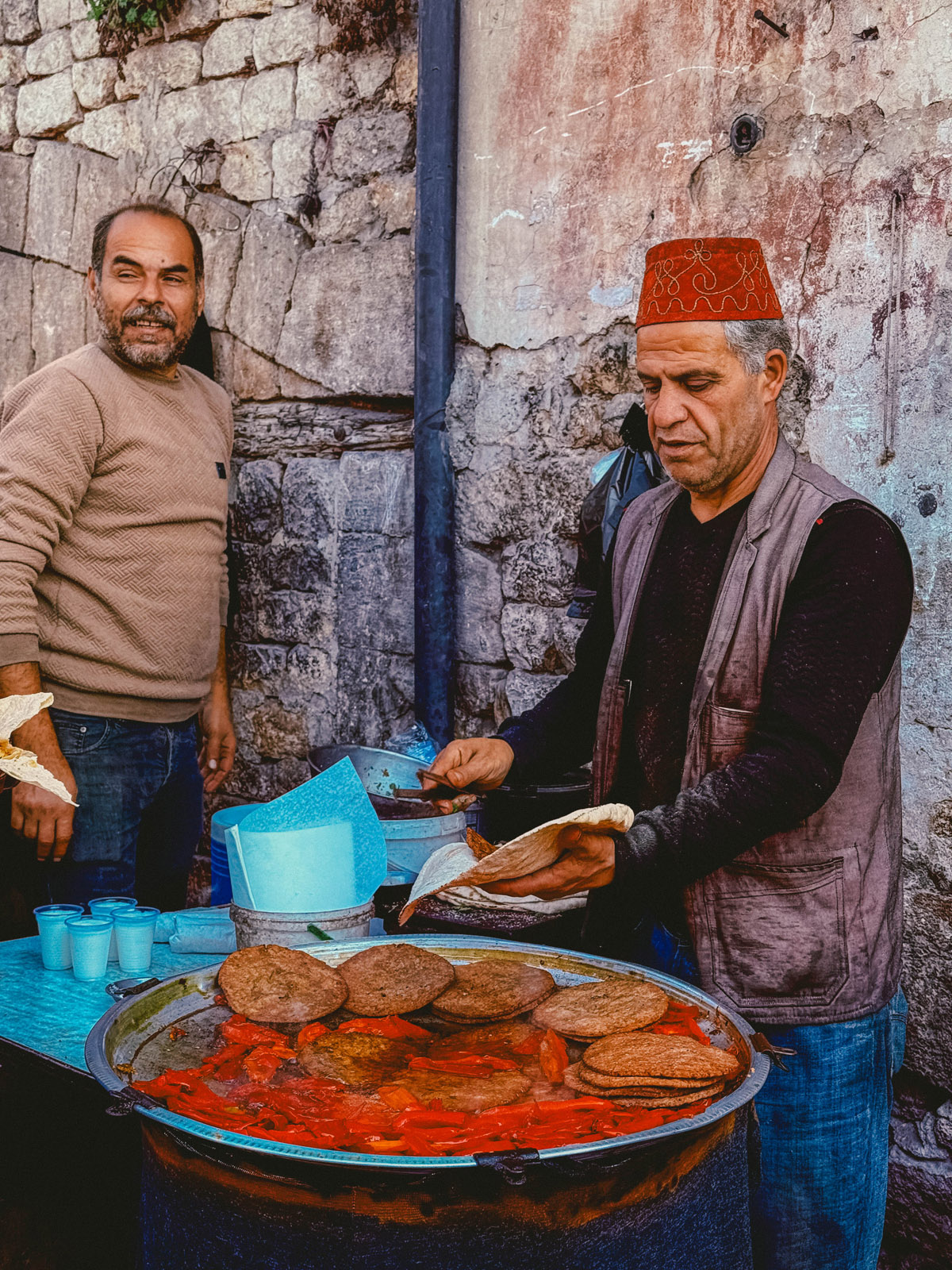
Now: I can feel myself about to do the thing. The thing where a person comes back from somewhere complex and arranges the inhabitants into a heart-warming little diorama: they had nothing, yet gave everything. I would like to physically restrain myself, because these were not symbols sent to improve me. They were people. This is a country a little over a year past the fall of a fifty-year regime, governed now by a transitional government, with neighbourhoods that need rebuild. The warmth I kept getting ambushed by was a decision, made daily, by people with every reason to make the opposite one. Which is far more impressive than innocence and should not be flattened into an inspirational caption, including by me, right now, as I am very obviously tempted to do.
You don’t wander Syria as a foreigner; you go with a local guide, and ours was a man named Tambee. He could date every stone we passed and loved the place with an almost evangelical energy. He is knowledgeable, passionate, and, more than anything, hopeful about where his country goes next, in a way we kept finding quietly astonishing. We were in good hands the whole way. But it was the hope I kept stealing glances at.
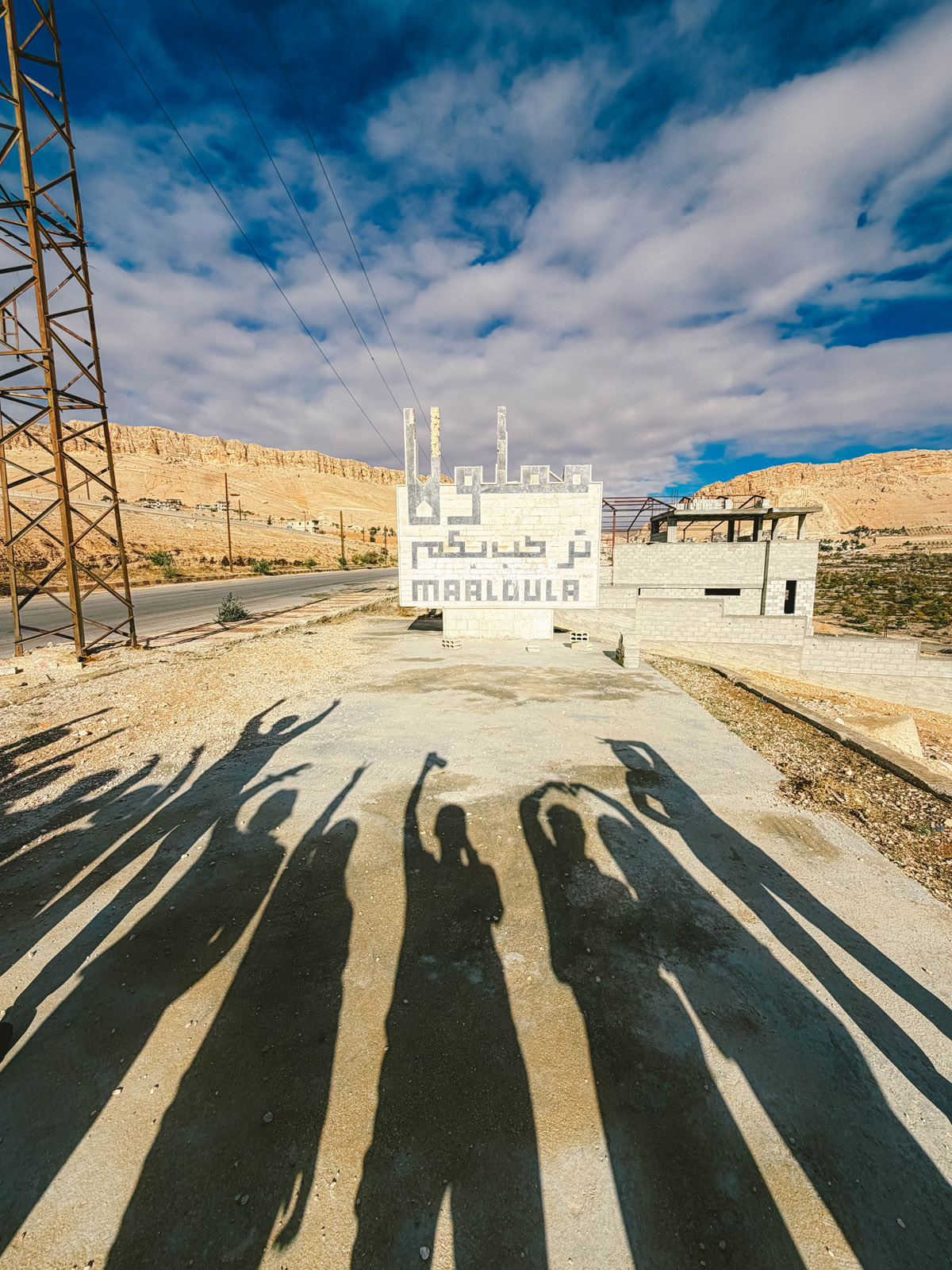
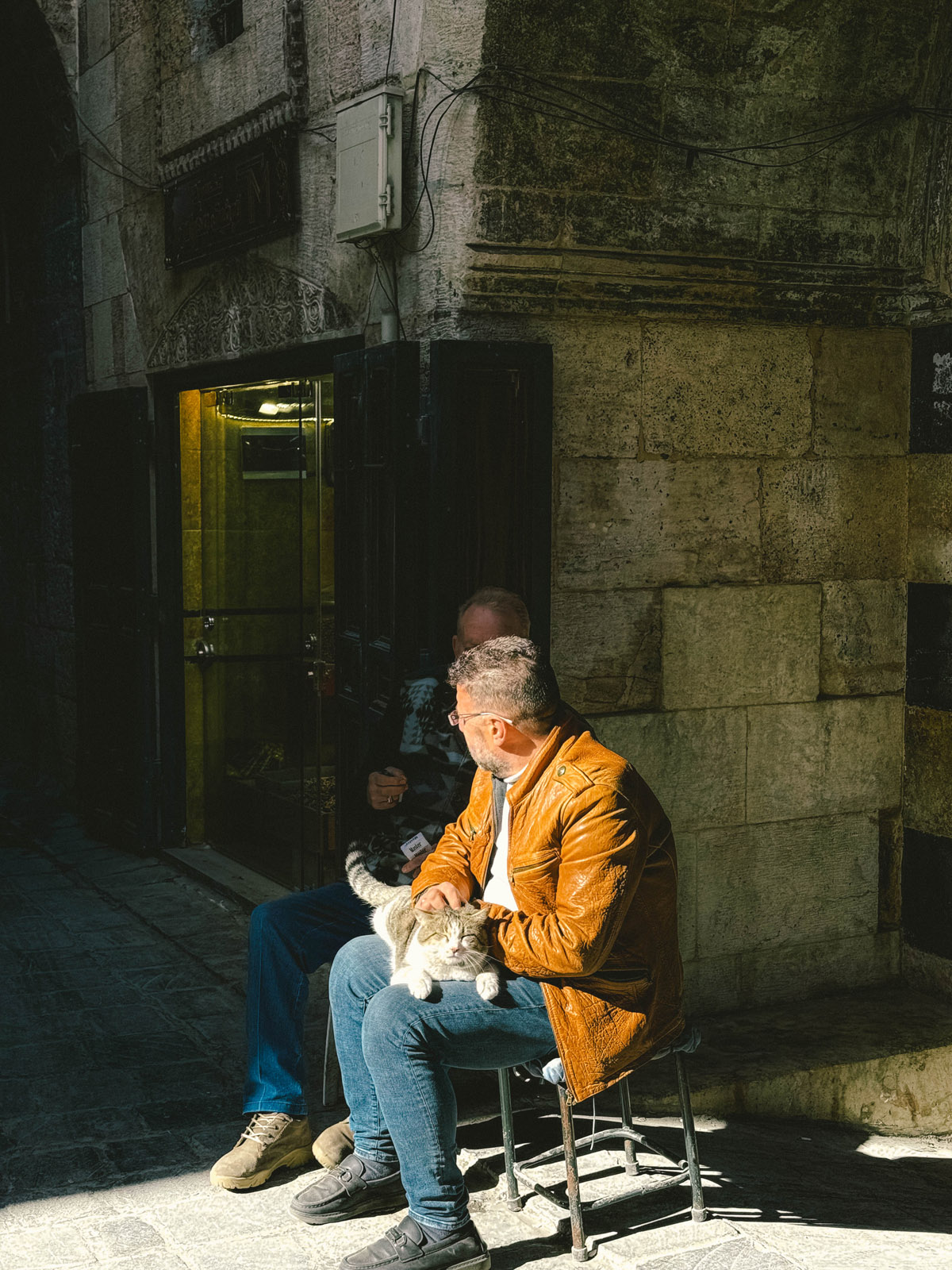
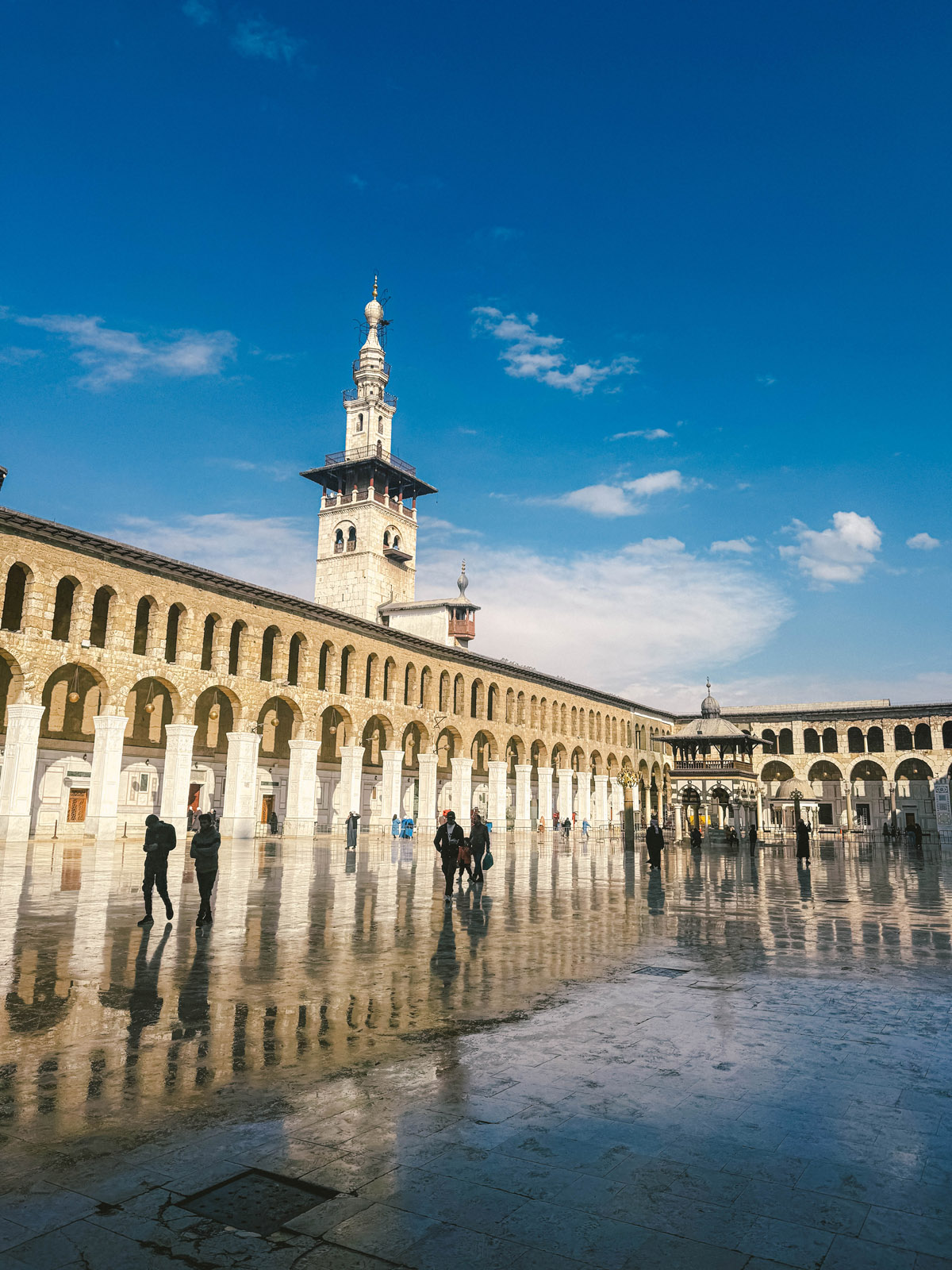
We saw the things you go to see. In Maaloula, a town ISIS half-destroyed a decade ago, people still speak a living form of Aramaic, the language Jesus spoke, in completely ordinary mouths about completely ordinary things. In the Umayyad Mosque, Christians and Muslims had, for a time, prayed under the same roof. Old men drank coffee against stones that have watched whole empires arrive and leave; kids kicked a ball past walls older than my entire country. At the Hotel Baron in Aleppo, where Agatha Christie wrote part of Murder on the Orient Express, the faded grand old place sat there having quietly watched a century pass. I kept losing track of which civilization I was looking at, until I clocked that the question was backwards: so much of what the rest of us inherited came through here first.
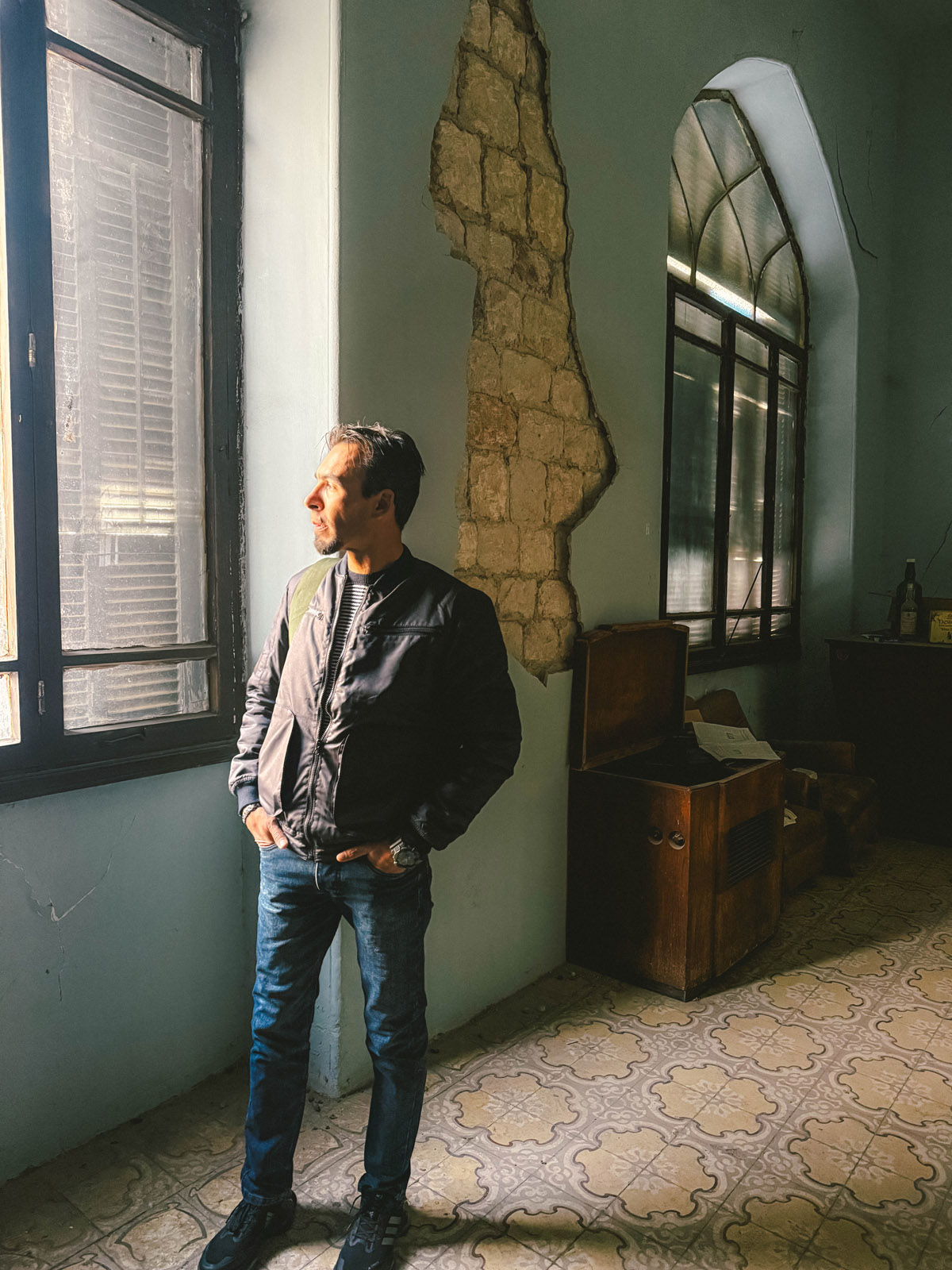
And the place was alive going forward, too, which undid me a little. In Homs and Aleppo we drove past street after street of rubble.
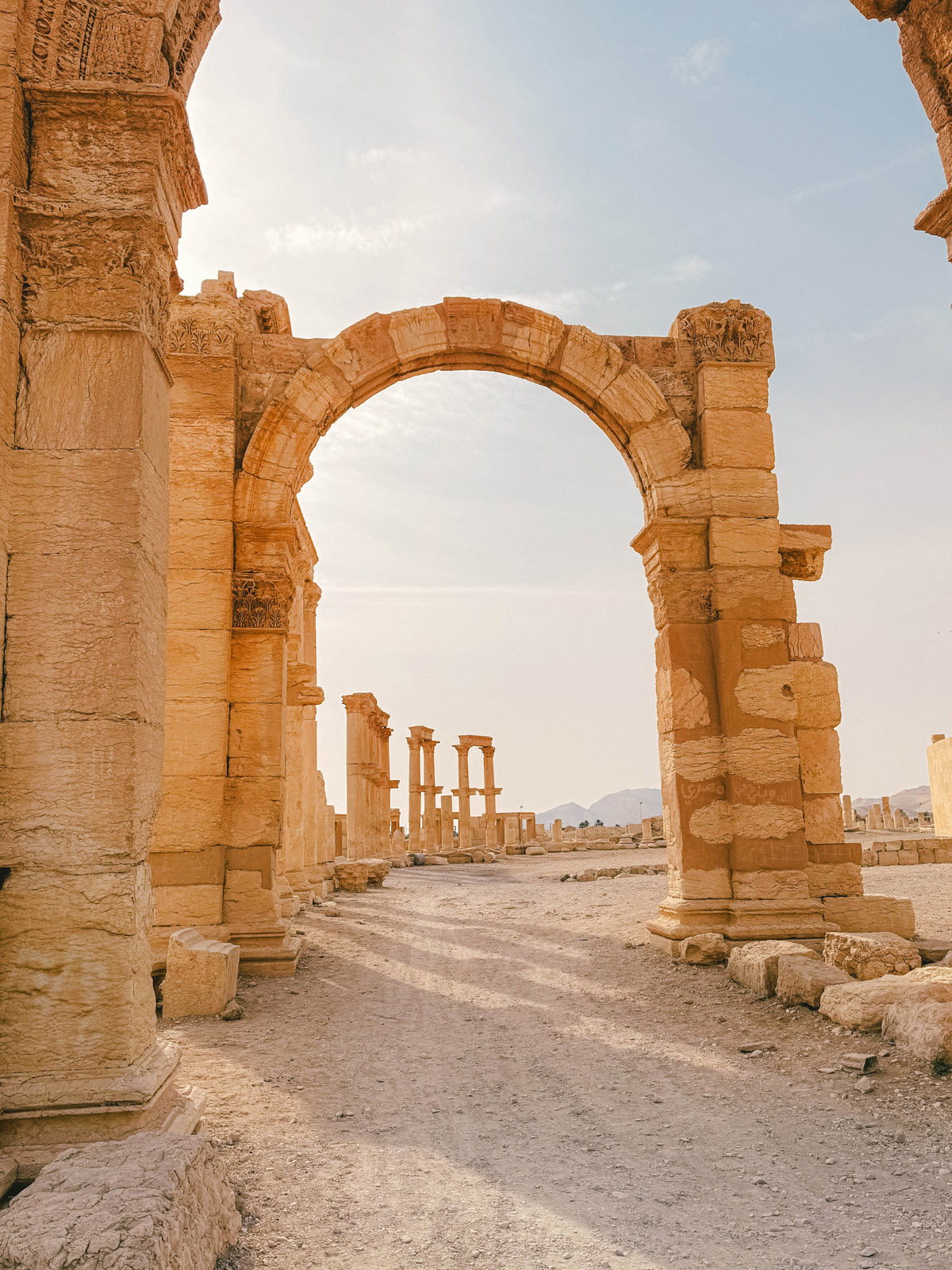
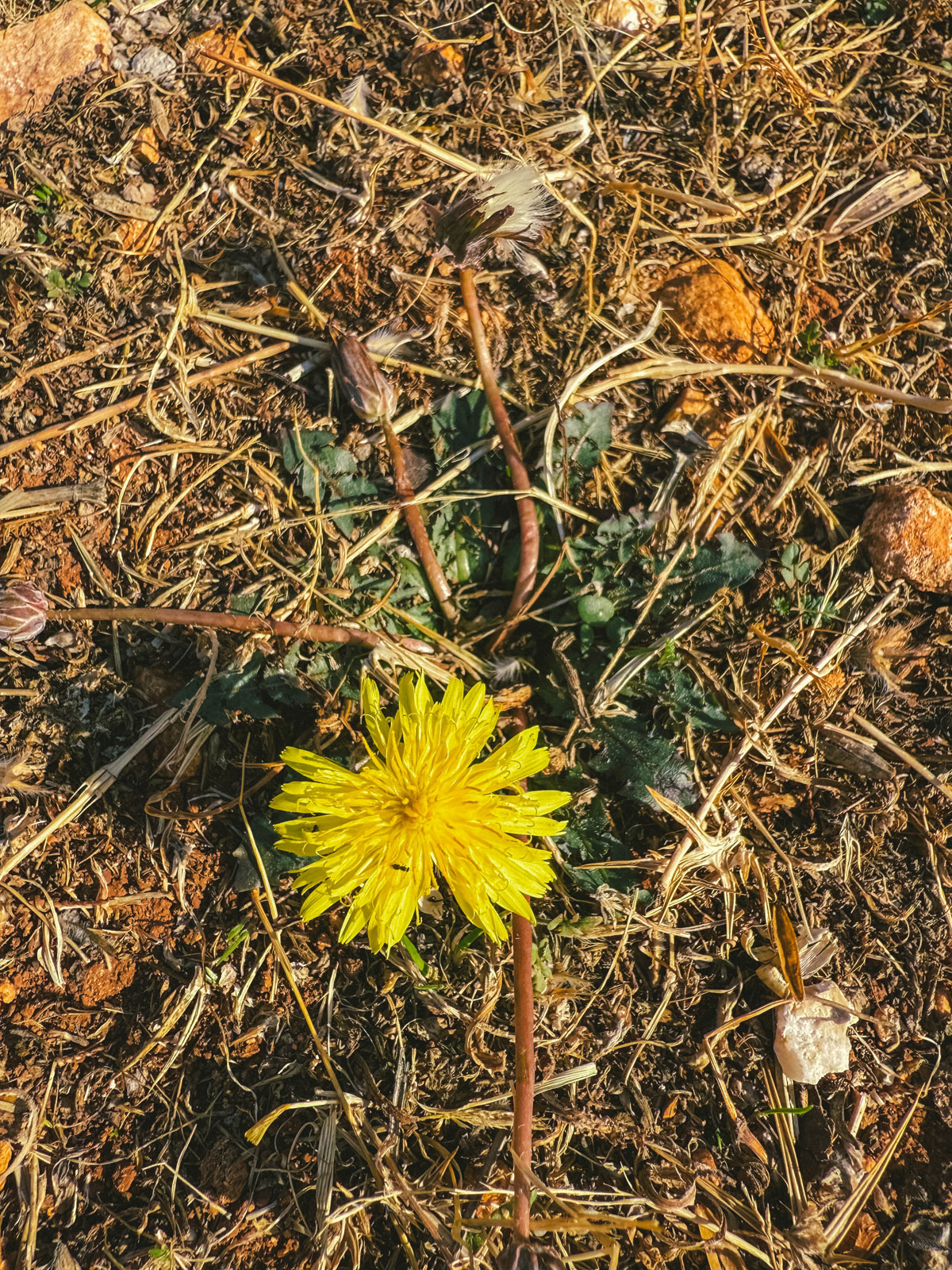
Then came Independence Day, and the whole street filled at once. We watched it from the bus, a celebration that was not ours, in a country that was not ours, full of people who by every headline’s math had earned the right to feel only their losses, and were instead loudly, flagrantly, happy. People kept catching our eyes through the glass and grinning and waving us in, the way they’d waved us in the last 11 days. I was moved to tears because it was simply one of the most humbling experiences I have ever been allowed to watch.
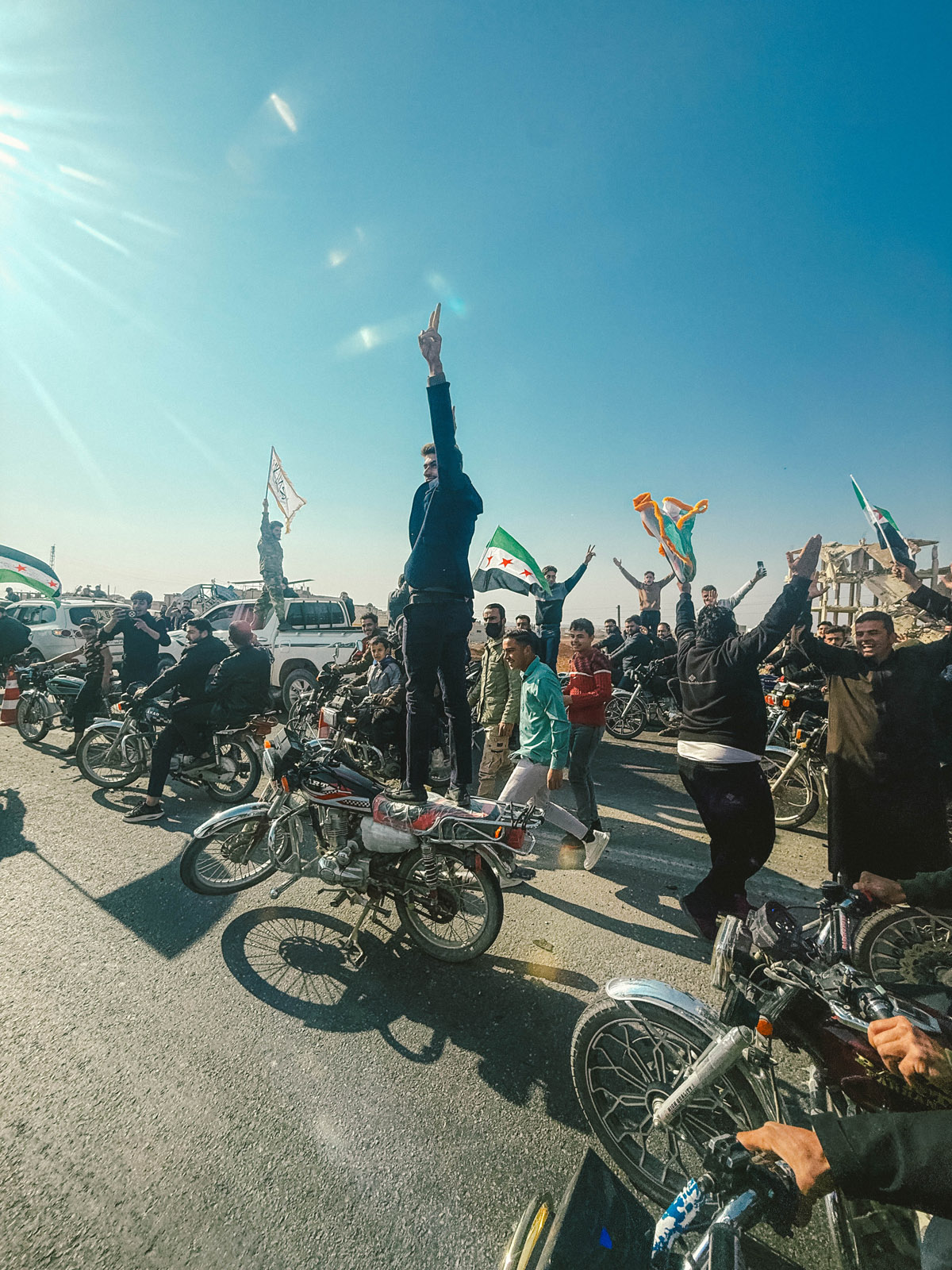
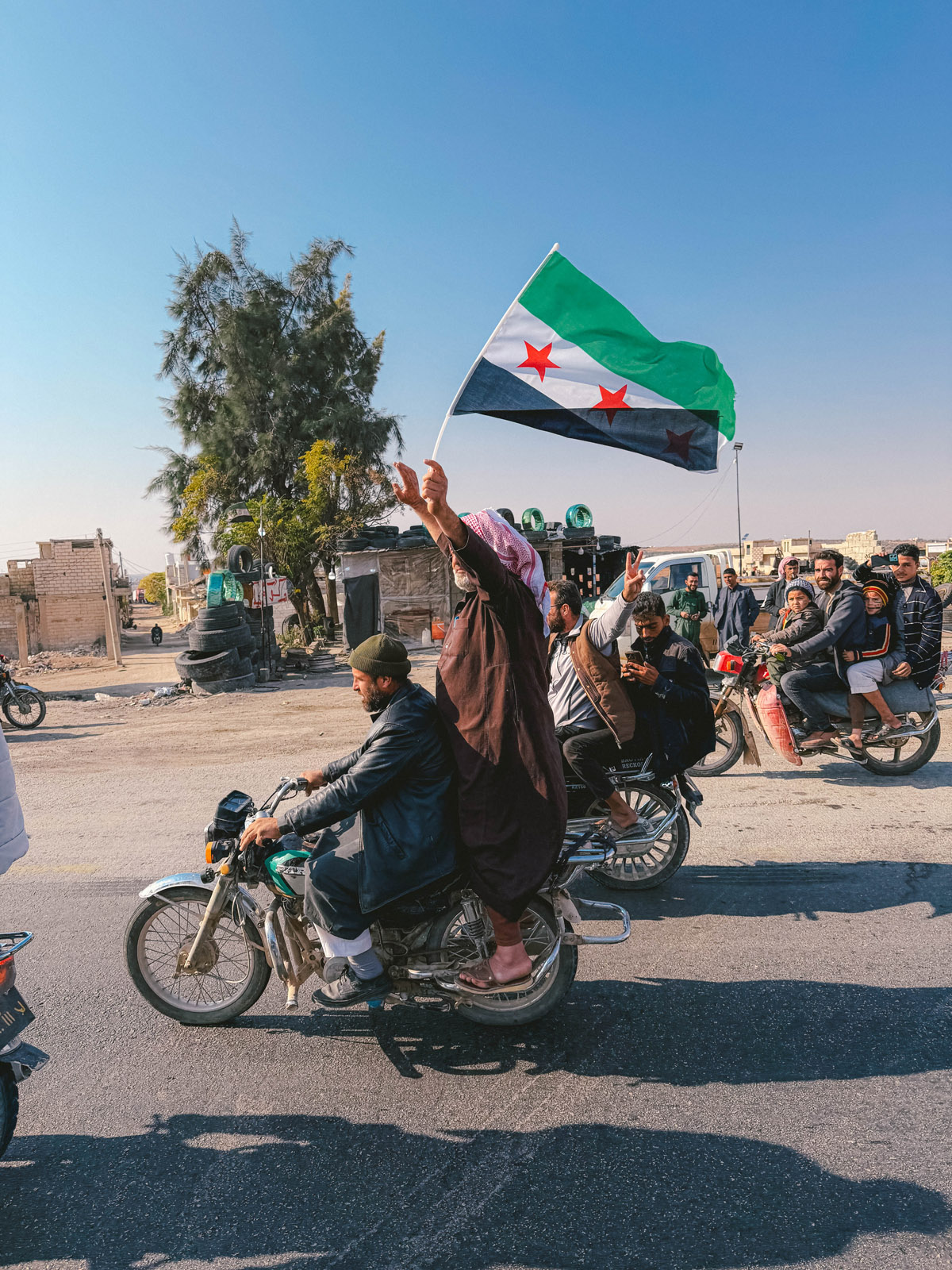
I’m not going to pretend 11 days taught me about Syria. I was a guest, shown a guest’s portion of kindness, which is nowhere near the whole truth of a place this complicated. Someone asked me, partway through, whether I felt the weight of the place. I said no and was surprised to find I meant it. It wasn’t that the weight wasn’t there. It was that it sat right beside an enormous, almost stubborn generosity, and the generosity was, most days, louder.
ELAINE NEO is drawn to arriving somewhere without deciding in advance what it means. She sees travel as a kind of anthropology, a way of understanding how a place, its people, and its culture are formed. Elaine believes in writing as a vessel to carry those stories forward. When she isn’t away, she’s at home in Singapore with a cat who loves anything warm.