

A DOOR TO FORGIVENESS
BY RHETT ARENS
The paved trail rose and fell as it wound through the verdant jungle along Cat Ba’s southern shore. Our bikes weren’t exactly tuned for performance but with a little extra oomph we soon found ourselves peddling into the tiny Vietnamese village of Viet Hai. Unexpectedly the next few hours would hold a mirror to our past and acceptance towards our future. This is how an unexpected encounter becomes a travel gift. On her front porch, in her village, is where I met Mung. We are the same age, and like me, she was a child during the Vietnam War.
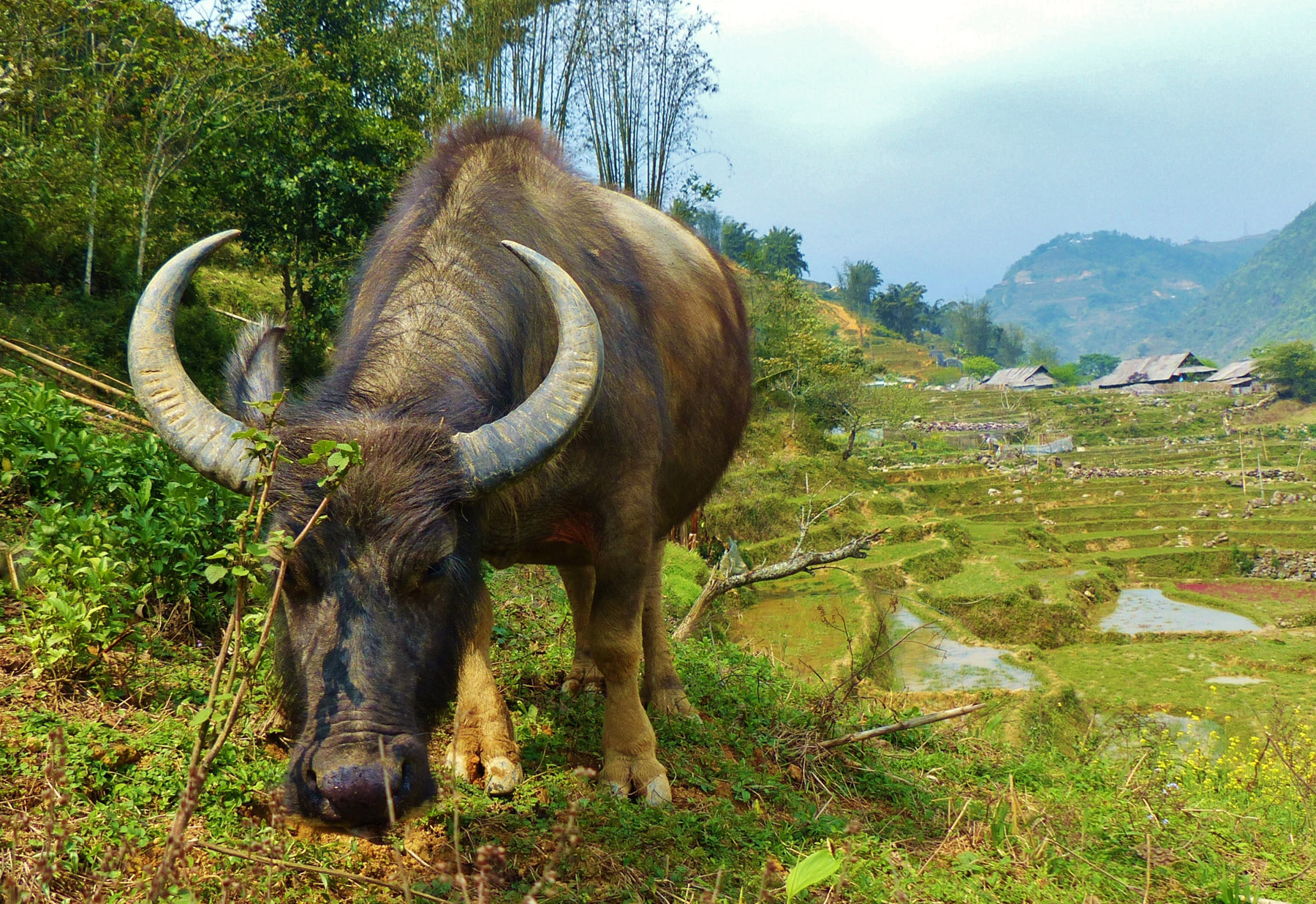
Viet Hai is not really off the beaten path and that’s the point. In fact, this bicycle trek is one of the day-excursions offered by a handful of the small cruise operators that navigate the calm waters and towering karsts within Lan Ha Bay. Lan Ha itself is a quieter, environmentally protected subregion within the greater Ha Long Bay ecosystem which was designated a UNESCO World Heritage Site in 1994. It’s no secret that these waters have been under siege from the flotsam and jetsam of an unrestrained Vietnamese tourism machine for several decades. A complicated problem to be sure — balancing local economic empowerment while trying to preserve the aesthetic qualities that brought this corner of the South China Sea to the world’s attention in the first place. This concern is not unique to Ha Long Bay or Vietnam in general. Earlier in my travels I encountered a similar struggle for responsible tourism in the northern mountain region around Sapa, another sublime landscape in danger of losing its character.

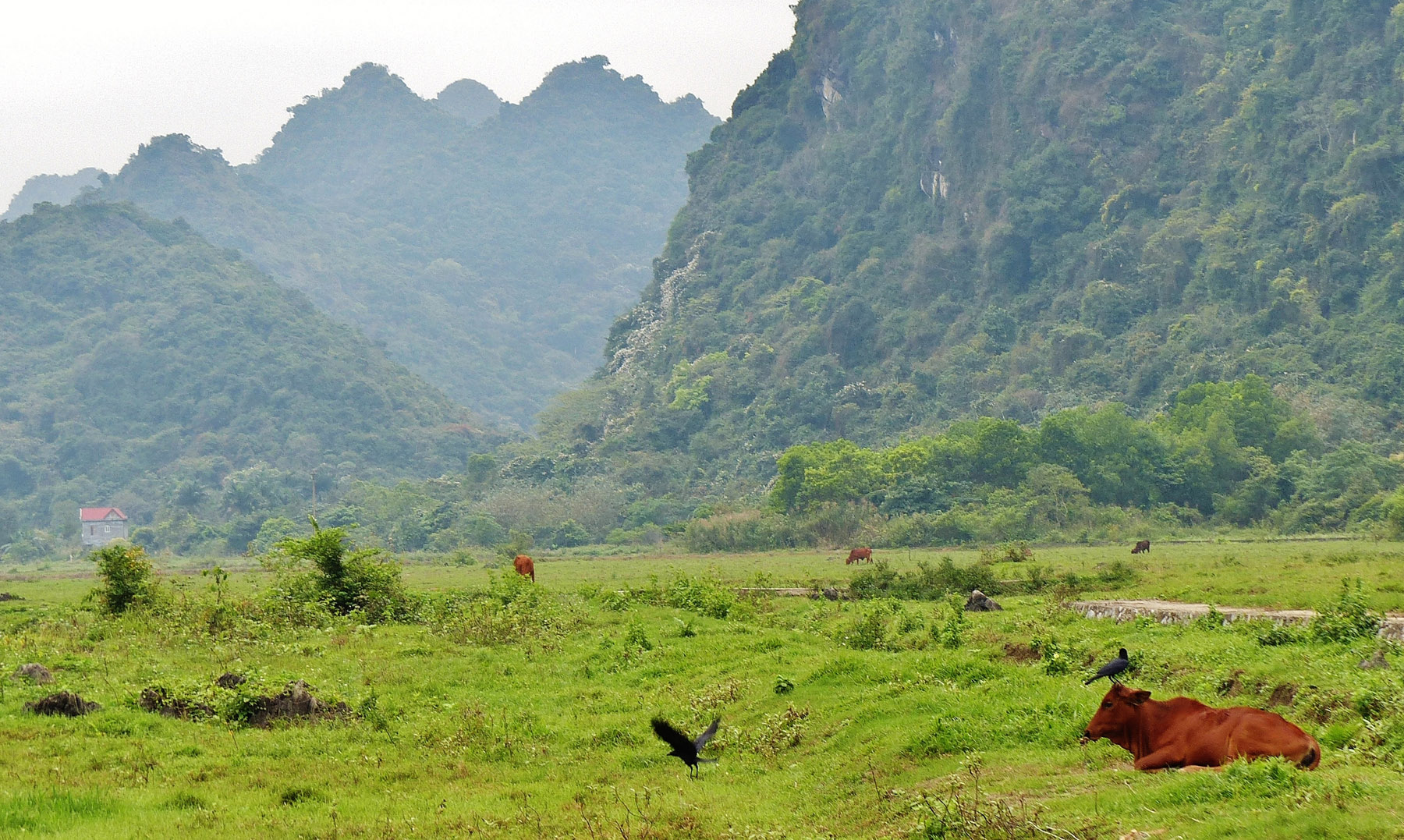
Of the nearly 1,600 islands that spread across the greater Halong Bay archipelago in the Gulf of Tonkin, Cat Ba is the largest. Viet Hai sits quietly near Cat Ba’s eastern shore, an inland village of 200 or so farmers, fisherman and home stay hosts. It is nestled within a lush green flatbottomed valley surrounded by the towering limestone that gives Lan Ha Bay its signature beauty. The village originally took shape centuries ago as a refuge against the unpredictable typhoon seasons and is now home to the families who have fished in the shallow waters around Cat Ba for generations. Those families rode out the seasonal storms under the protection of the cliff-side caves and rudimentary structures within the valley. Over time those protective dwellings were revisited year after year until a small, central village of some permanence eventually took shape. In 2011, Viet Hai was officially designated as a protected tourist development project with the support of local government and several philanthropic economic agencies. Today it is managed under the Hai Phong Border Security Organization who have done a splendid job maintaining the village culture and bucolic atmosphere.

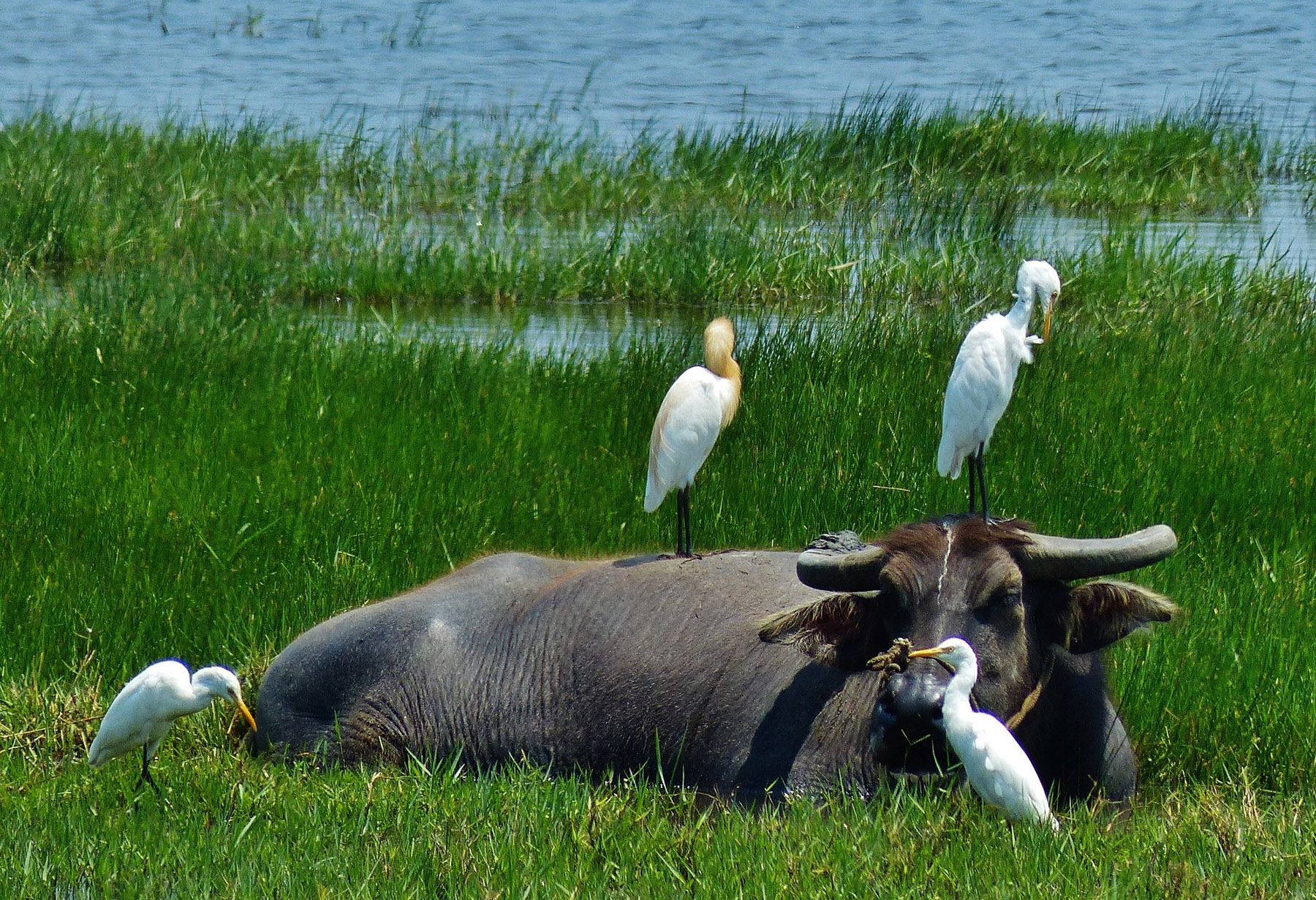
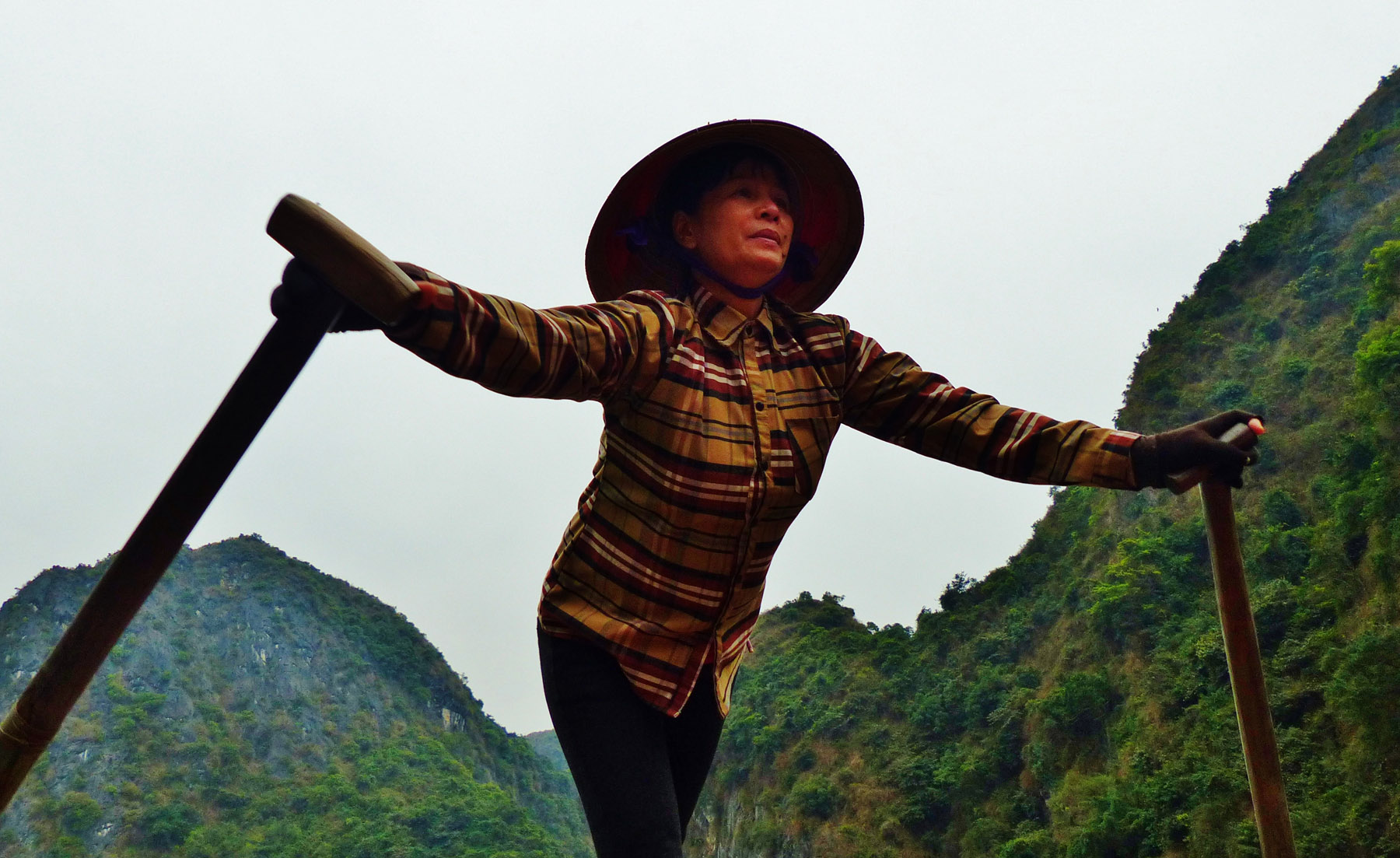

Tranquility and an agrarian ambience still float through the valley today. Green beyond description, the workable land is divided neatly into family parcels that produce the daily needs of the villagers and a little bit extra for commerce. These small family farms require strong hands, a healthy back and the blessings of good weather. The ibises and spoonbills still work the thermals above the fields, hovering in broad circles against the hazy sky. The cattle move slowly in the stifling midday heat.
The community essence of Viet Hai feels much like the small-town farms I grew up in. They echo a rural harmony that offers security and calm. As I hold my gaze a bit longer out across the rice fields and pastureland, things start to refocus. Strange, symmetrical depressions in the ground begin to show themselves. Upon closer inspection you see that many are filled with water, and I am later told they are utilized as fishing farm tanks. Then it hits me, these are bomb craters, randomly scattered here and there in the middle of nowhere. It is a crushing realization that this rustic, sheltered valley was once a target for destruction; directed by individuals who never set foot on its damp soil.
The craters are the result of an unrelenting air campaign in the late 60’s from 15,000 feet above the island with push buttons, hydraulic bomb bays and misguided intelligence. Laid out below in the genteel valley were rice fields, farming homesteads, chicken coups, lush gardens, drying racks, potbellied pigs, water buffalo and Vietnamese women and children who had no stake in the struggle for political ideology. None of it visible to the pilots from the cockpits of the B52’s who flew countless missions through the low clouds and metaphorical haze of the Vietnam-American War.
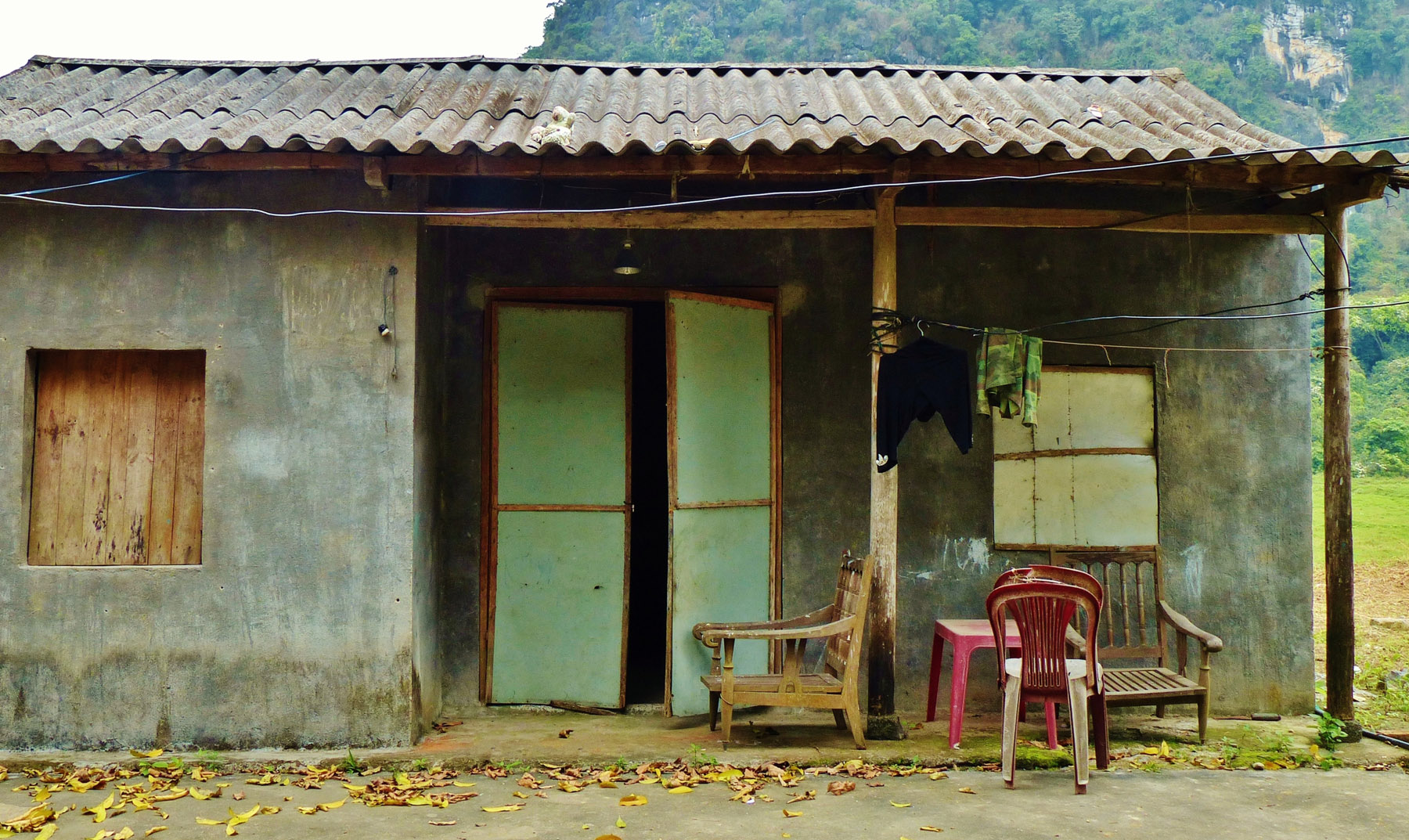
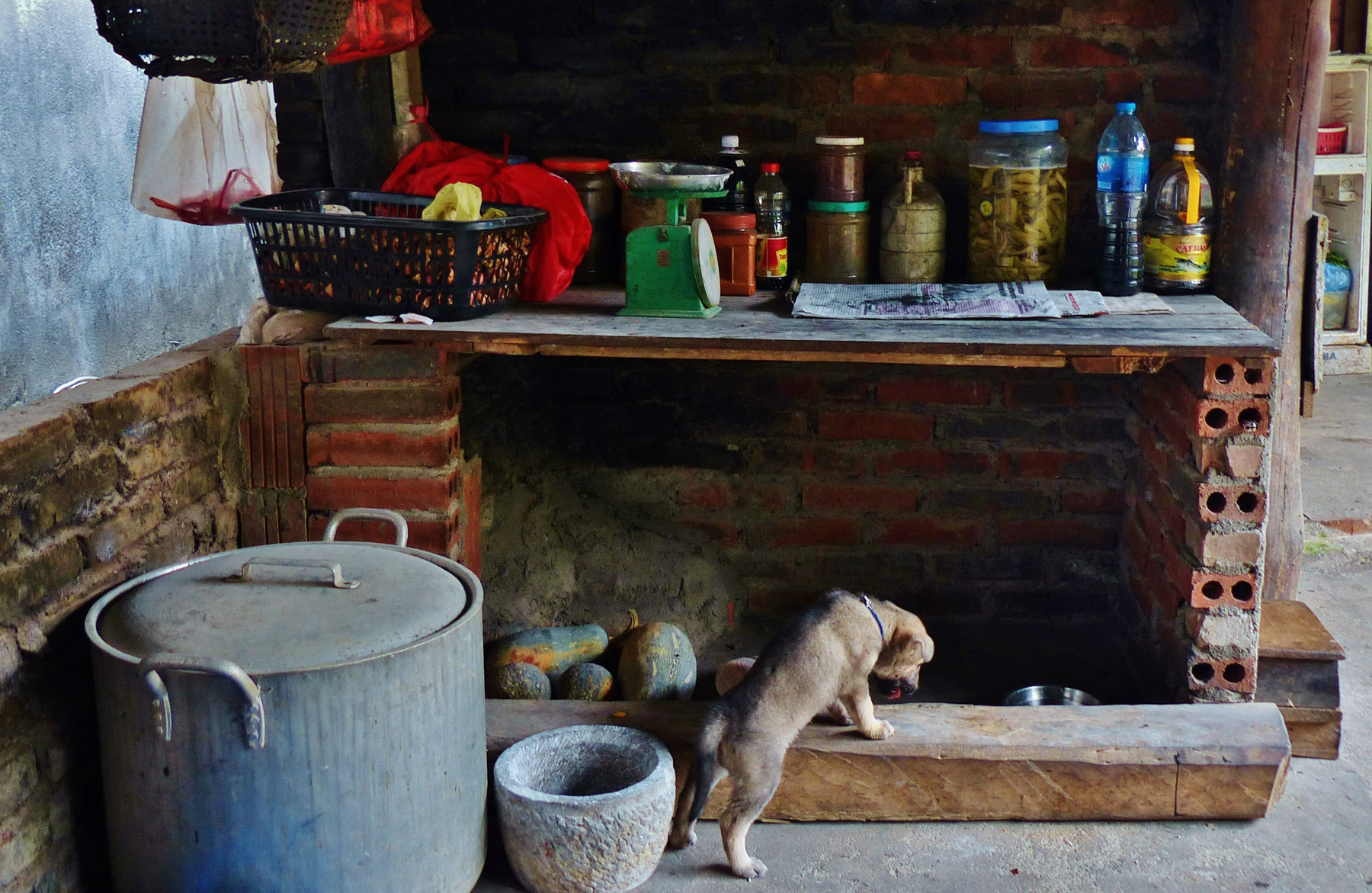

Local entrepreneur and life-long resident Do Thi Mung has lived all her 66 years in this valley. Viet Hai is her village. She worked the land shoulder-to-shoulder with her family and neighbors, planting fields and nurturing the stubborn mud into subsistence gardens. Today she runs a modest business selling seven flavors of rice wine out of her home. Her friendly home store attracts day-trippers like me who find themselves parking their bikes and wandering the village on foot. In 1969, when the American air campaign was kicked into high gear, Mung was ten years old.
As I take a seat in the shade to sample her homemade wine my conversation with Mung takes a gradual turn from small talk to big talk. I can surmise through a translator that she is close to my age, I ask with some hesitation and learn she is exactly my age. From that point forward the questions seemed to be ask themselves. What was it like as a young girl during the bombings? Did she understand why someone or something she didn’t know was destroying her village? Was there death and displacement within her immediate family? Is there any way to forgive? Is there any apology that remotely addresses the destruction of lives and psyche? How are you able to sit here with me, an American, given the acts of war? The exchange continued for over an hour under the filtered light of a large banyan tree in her front yard. As a puppy played at her feet she pointed to the areas in her village where buildings once stood and then across the road where several bomb craters sat, concave reminders of the impact of misinformation. She proudly pointed out they now ripple with healthy carp and leopard frogs. Clear proof that individuals can move on, that war is smaller than the people who survive it.

Her answers continued to come in waves. Her days and nights were spent sprinting into the caves, gathering and sheltering her siblings, wondering if her daily needs would be met. Her life was reduced to finding a dry place to sleep, protecting the livestock and huddling somewhere in the valley waiting out the next round of explosions.
Strong beyond her years, Mung survived but not everyone in her family did. As she sat silently her eyes spoke volumes. When she spoke again her eyes averted mine. Was it because she was feeling my shame? Was it the absurdity of our encounter? I’m certain my eyes were asking for forgiveness. We looked at each other without blinking, then we rose in silence. Together, as perfect strangers, we rose and hugged for a long time, bringing me to a release I never knew I needed, then she quietly spoke a phrase I didn’t understand – sự tha thứ. Our translator then shared a word I have carried with me since that day forward – forgiveness.
The stories continued to pour forth with the rice wine and more tears. More hugs of remorse were shared with a clarity that overrode our need for words. Mung understood my shame as she took my hands, placed them on her heart and met my eyes with pardon. I’ve tried but I can’t comprehend the Vietnamese capacity for moving forward, for allowing our presence with such acceptance. I can only imagine that this strange moment with an American stranger is but a minor blip for this brave woman when compared to fire raining down in her own backyard. Mung helped me realize that travel is a door you can walk through to find… that we all share the same village.
RHETT ARENS is a writer/photographer living in Pasadena, CA who loves travel. He appreciates how it connects strangers and deflates xenophobia. His work has appeared in The Paris Review, Travel + Leisure, Taproot, Fifty Grande, Wanderlust, Boundary Waters Journal, Whitefish Review, Islands, ROVA and more. His fiction often addresses the negative effects of isolation and resulting self-delusion. He likes to say, travel is a peacemaker.